Windshields do two jobs that matter more than drivers think. They keep weather and debris out, and they keep you and your passengers in. That second part is structural. On modern cars, the windshield ties into the roof and pillars, supports airbag deployment, and helps maintain cabin integrity in a rollover. So when a rock turns into a crack, the stakes go beyond aesthetics or a fix-it ticket. The real question is not only what you will pay in dollars, but what you might pay in safety and time if you cut corners.
I have managed auto glass operations for years, and I have been in enough service bays to see what drives cost up or down. In ZIP 27419 and the surrounding Greensboro area codes, pricing swings widely. One shop quotes 280 dollars for a base sedan, another quotes 1,200 for the same car with a camera system. Both can be correct depending on the glass, the features, and the install conditions. This guide breaks it down in plain terms, with local color for 27419 and nearby codes like 27401 through 27499, so you can get an auto glass quote that makes sense and avoid expensive surprises.
What You Are Really Buying When You Buy a Windshield
A windshield replacement includes more than a sheet of laminated glass. You are buying a piece of safety equipment with electronics, adhesives, and labor that must meet a test you hope you never take.
Start with the glass itself. There are two broad buckets customers hear about. OEM, which implies the same brand that supplied the vehicle when new, and aftermarket, which includes reputable names that manufacture to DOT standards. A third bucket exists too, often ignored in ads, called dealer-only assemblies. Some windshields come with factory-bonded brackets, acoustic layers, rain sensor pads, and lane camera mounts that are difficult to replicate. The deeper the integration, the higher the cost.
Then there is the adhesive. Urethane is the industry standard. Cure time varies, and that affects when you can drive. A quick-cure urethane can be safe to drive in an hour or two in warm weather. A slower formula can need four hours or more, especially if the temperature dips. Any reputable shop will post a safe drive-away time. If they do not, ask. The difference can change your day, or your safety, if you plan to get back on the highway immediately after the install.
Finally, calibration. ADAS, the alphabet soup for modern driver assistance, turns a glass swap into a tech service. Cameras, lidar windows, rain sensors, and HUD projectors often live in or around the windshield. Remove the glass, and the optical path or sensor angle changes. That requires calibration with static targets or a dynamic road test, sometimes both. If your car has adaptive cruise control, lane departure warning, or a front camera, expect a calibration line item on your invoice.
Why Costs in 27419 Range So Much
In the 27419 area, most replacements land between 300 and 1,600 dollars. That wide band can feel arbitrary until you tease apart the drivers.
Vehicle class matters. A 2010 Civic with no sensors is a different proposition than a 2022 RAV4 with a heated wiper park and a front camera. Glass manufacturers produce multiple variants for the same model year depending on trim, and the shop needs your VIN to pin it down.
Features matter more than brand. Acoustic interlayers to quiet road noise add cost. Solar coatings add cost. Heated glass and humidity sensors add cost. A heads-up display layer can push a windshield from 500 to 1,200 dollars on its own.
Supply and availability matter week to week. If 27419’s distribution hub has your part in stock, you save on freight and time. If it has to come from out of state, add shipping and a few days. Weather spikes demand too. A cold snap followed by a warm day will stretch cracks and flood schedules. Shops in 27401, 27402, and 27403 feel that wave just like 27419, and prices can reflect overtime or mobile crew dispatch.
Labor and calibration tools matter. A shop that invested in OEM target boards and software for calibrations on brands like Toyota Safety Sense and Honda Sensing will charge for that capacity. So will a shop that pays for third party mobile calibration on site. If they do not calibrate and your dash lights come on, you are back for a second visit. That second visit adds time you could have saved by handling it in one stop.
The Local Landscape, Without the Sales Pitch
If you type Auto Glass Shop near 27419 into your phone, you will get a list that blends national franchises with independent operators. I have respect for both when they do the work right. Here is how I approach the Greensboro map without getting seduced by the lowest number.
Check whether the shop services adjacent ZIPs like 27401, 27402, 27403, 27404, and 27405 with the same technician pool and calibration bay. If they handle 27406 through 27411 and beyond, including 27412, 27413, and 27415, that scale can help with parts flow. If they also cover 27416, 27417, 27420, 27425, and 27427, they likely have access to more than one distributor. Broad coverage into 27429, 27435, 27438, and 27455 tells me they know the rural mobile challenges. Add in 27495, 27497, 27498, and 27499, and you are probably looking at a hub with the best auto glass shop Greensboro right equipment for ADAS. Range by itself does not guarantee quality, but it often correlates with a shop that has seen your year, make, and model before.
Ask for an itemized auto glass quote. In 27419, you should be able to request a clear auto glass quote 27419 in minutes if you have your VIN. Do the same in nearby ZIPs if you commute or work across town. A quick auto glass quote 27401 or auto glass quote 27407 can reveal regional pricing differences for the same part if your schedule is flexible. The shop should break out glass cost, moldings or clips, labor, mobile fee if any, sales tax, and calibration. If they just throw a number at you, you may miss a cheap initial estimate followed by add-ons the day of the job.
Insurance, Deductibles, and What Makes Sense
Plenty of drivers in 27419 run comprehensive coverage with a deductible that sits around 250 to 500 dollars. Some carriers offer full glass coverage with zero deductible. The cost calculus is simple at first glance. If your cash price is less than the deductible, you pay cash. If your cash price is more, you consider a claim. The nuance lives in how claims history affects premiums and how the insurer steers work.
If you have full glass with zero deductible, use it. That coverage exists for a reason, and the insurance network already prepaid a portion of the logistical friction for you. If you have a 500 dollar deductible and the cash price is 550 for a basic 27419 windshield replacement, ask the shop for a cash discount before calling your insurer. Many shops drop 10 to 15 percent off for a clean cash sale because it avoids paperwork and network fees.
Be aware of insurer networks that direct you to a call center. They are not forcing you to use a specific shop in 27419 or 27401, but they do steer. If you have a trusted 27419 Auto Glass specialist or a shop near 27410 that has done your glass before, tell the insurer you want that shop. The shop can still bill the claim if they are set up with your carrier or a third party administrator.
OEM vs Aftermarket: When Paying More Pays Off
I have installed both. On older vehicles with no cameras, a high-quality aftermarket windshield from a known brand like Pilkington or PGW can match OEM fit and optical clarity. On newer vehicles with HUD, rain sensors, or cameras, OEM or OEM-equivalent often saves headaches. Here is what to weigh:
Optics. HUD windshields need a specific interlayer and angle to project correctly. Cheap glass can ghost or blur the display. If you have a HUD in a 27410 luxury sedan, ask for OEM. If you drive a base trim in 27405 without advanced features, a quality aftermarket piece is fine.
Mounts and brackets. Some camera housings are sensitive to mounting pin placement. Aftermarket suppliers build to spec, but tolerances can stack. If your last aftermarket glass needed a shim to align the camera, step up to OEM this time.
Acoustic and tint layers. Sound-dampening glass makes a tangible difference on the highway. If your car came with acoustic glass, keep it that way. Some aftermarket options offer acoustic layers. Check before you downgrade by accident to save 80 dollars.
Mobile Installation vs Shop Bay
Mobile is convenient. In 27419, with busy days and tight commutes into 27407, 27408, or 27409, having a technician come to your driveway is attractive. It works well for simpler installs and fair weather. The adhesive cures better with stable temperature, and the tech can keep contaminants under control.
Shop installs bring advantages for ADAS calibration and for vehicles that require a pre-scan and post-scan of fault codes. Static calibration rigs need space, level floors, and precise targets. If your vehicle requires a static calibration, insist on a shop visit or a mobile unit that sets up a proper calibration environment. Dynamic calibrations on models like some Mazdas and Subarus can be done on a road test if conditions allow. If your schedule is tight and you bounce between 27412, 27413, and 27415, plan the calendar so you are not stranded during calibration.
One note on weather. Adhesive performance changes with humidity and cold. If you schedule a mobile job in 27419 during a December cold snap, ask the shop whether they use a cold-weather urethane and whether safe drive-away time will change. I have seen jobs delayed or rebooked because the forecast did not allow a safe cure before nightfall.
The Hidden Costs People Forget to Count
Time is the first. A thorough replacement takes 90 to 180 minutes, plus calibration, plus cure time. If your day runs through 27416 and 27417 before you end in 27419, a mobile job might save a commute but add hours to your schedule if the calibration requires a shop bay after all.
Retained hardware is the second. Some vehicles use one-time clips or moldings that must be replaced. A low quote that does not include moldings could balloon on install day. Ask whether the price includes all clips and trim, and whether the shop stocks them for your model.
Water leaks and wind noise are the third. If the urethane bead is too thin or the glass sits off angle, you can inherit a whistle at 50 mph or a drip near the A pillar in the first rain. A reputable shop will stand behind their work and reseal, but you still lose time. The cheapest installer costs more if you drive back twice.
Calibration failures are the fourth. If the installer replaces the glass but sends you to a third party for calibration, you may pay two invoices and coordinate two appointments. A shop that handles both in 27419 or in a nearby 27420 facility can consolidate hassle, and that has value beyond the sticker price.
Safety Inspections, State Law, and When You Must Replace
North Carolina does not require emissions inspections for every vehicle, but safety inspections are standard. A crack in the driver’s line of sight can fail an inspection. Even if your crack sits on the passenger side today, cracks propagate. A temperature shift or a pothole on the 27425 run can turn a one-inch chip into a spider web overnight.
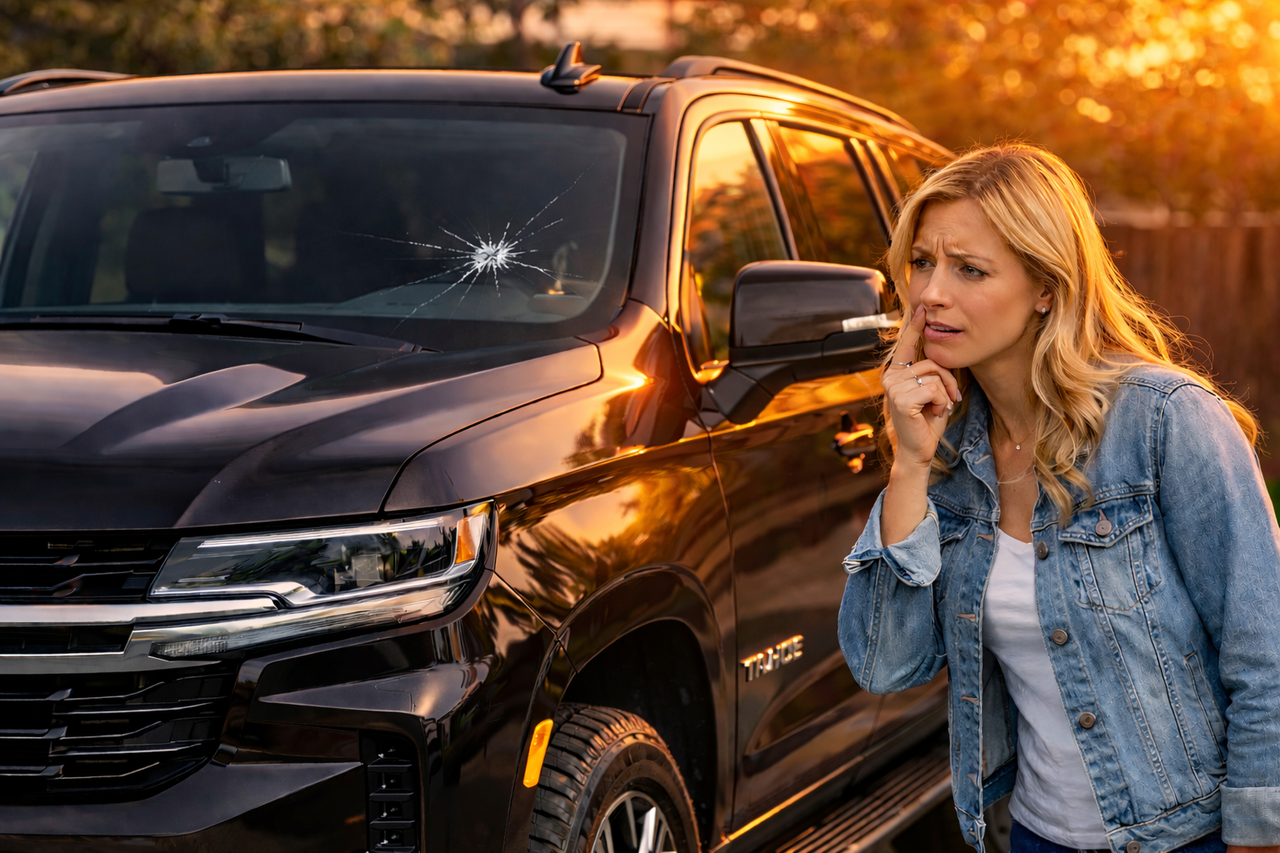
There is also a structural reason to act sooner. A clean, small chip can often be repaired for 90 to 150 dollars. Wait until road grit contaminates the break or until a long crack forms from the edge, and repair is no longer viable. A repair keeps the factory seal intact, which is ideal. It is the original bond that was cured in a controlled environment. If your damage is fresh and smaller than a quarter, and not in the camera’s field of view, a repair is the best value.
How to Read and Compare Quotes Without Getting Burned
Use the same information set for every shop. Provide your VIN, describe features like rain sensors or heated wipers, and note whether you have a HUD. Ask for an itemized quote that includes tax and calibration. If you request an auto glass quote 27419 from one shop, mirror that when you ask for an auto glass quote 27401 or an auto glass quote 27410. Apples to apples matters.
Pay attention to the glass brand in the quote. “Like kind and quality” is a vague phrase. Ask which manufacturer, and whether the glass has the correct tint and acoustic layer. Ask whether the shop uses new moldings or reuses yours. Some moldings are meant to be reused, others are not.
Ask for the safe drive-away time in writing. That single line tells you whether the shop cares about protecting you after you leave. If they say “you are good to go right away,” push back. There is always a cure time.
Confirm whether calibration is included. If you have lane keep assist, forward collision warning, or adaptive cruise, the answer should be yes. If they do not calibrate, ask who will, when, and for how much.
When the Zip Code Matters
People move around the Triad all day. You live in 27419, work in 27409, run errands through 27407, and drop kids off near 27408. That mobility gives you options. A shop near your office in 27401 may have an earlier slot or different pricing. A facility in 27405 might have your glass on the shelf. A calibration bay in 27420 could be open after 4 pm, which solves a childcare puzzle. I have seen customers save both money and time by widening the search from 27419 to adjacent ZIPs like 27403, 27404, 27406, 27411, 27412, and 27413. The same applies farther afield in 27415, 27416, 27417, 27425, 27427, 27429, and 27435. Broader coverage, smarter scheduling.
With that said, do not chase a 30 dollar difference across town if it adds hours and a second appointment for calibration. Your time has a cost. If a shop near 27419 offers one-stop service, a lifetime leak warranty, and the right glass, that package often beats a rock-bottom price in 27438 or 27455 that splits the job into two visits.
Real Numbers From the Bay
Over the last year, I saw a 2016 Camry in 27419 with a rain sensor and no camera price out at 420 to 520 dollars cash, installed in-shop with new molding. A 2020 RAV4 with Toyota Safety Sense ran 900 to 1,200 with calibration. A 2012 F-150, basic trim, was 330 mobile in good weather. A 2019 Accord with a HUD required OEM glass by the owner’s request and landed at 1,350 with static and dynamic calibration. A 2014 Subaru Outback in 27407, with EyeSight cameras, needed a precise bracket and came out at 780 including recalibration.
The outliers teach lessons. A customer in 27410 accepted a lowball 275 dollar quote for a luxury SUV. The glass arrived without the correct solar coating, the HUD ghosted, and he paid to redo the job with OEM at a second shop. Cheap once, expensive twice. On the other side, a small business owner in 27411 called five shops for an auto glass quote 27411 and found a reputable independent that discounted 12 percent for cash and fit him in the same afternoon. He saved time, kept his deductible intact, and had no issues.
The Installer Matters as Much as the Glass
Technique separates good from great. Removing the cowl without cracking it, cutting the old urethane cleanly without digging into paint, and laying a consistent bead takes practice. A rushed tech can nick the pinch weld and expose bare metal. Six months later, rust creeps in under the urethane. A year later, the windshield leaks. You can avoid that with a shop that trains their installers, replaces pitted blades on their tools, and uses primer on any exposed metal.
I walk into shops and look at their staging. Are the workbenches organized, are the guns clean, are they checking expiration dates on urethane? Do they glove up and mask the dash to avoid debris in your vents? These details show up in the final install. If you are visiting an Auto Glass Shop near 27419 or making a quick stop near 27409, take two minutes to look around. It tells you more than a discounted price ever will.
Warranty, Fine Print, and What It Really Covers
Most shops offer a lifetime warranty against leaks and workmanship defects for as long as you own the vehicle. That is standard. Ask how they handle stress cracks. If a crack starts at the edge with no impact point within 30 days, a good shop will often cover it as a courtesy. If the crack starts at a rock chip, that is on the road, not the glass.
Check calibration warranty too. If a dash light pops up within a week or two, you should be able to return for a recalibration at no charge. Some systems need a second pass after a few miles. That is normal. What is not normal is a shop that says calibration is “on you” after you leave. If you paid for it, they own the result.
When You Should Repair Instead of Replace
Repair has a narrow window. Damage smaller than a quarter, not in the driver’s line of sight, and not directly over a sensor can often be repaired. The goal is to stop the crack from spreading and improve clarity. A good repair gets you 70 to 90 percent optical improvement. The sooner you repair, the better, because resin works best on clean, fresh breaks.
If you are in 27419 and you catch a chip after a gravel truck shower on I-40, pull into a shaded spot, cover the chip with clear tape to keep dirt out, and call a shop for a same-day repair. Many shops cover 27401 through 27420 with mobile chip repair, and it takes 20 to 30 minutes. If the chip sits in the sweep of a camera or near the A pillar’s structural edge, expect the tech to recommend replacement. That is not upselling, it is responsible.
A Straightforward Way to Move From Quote to Safe Drive
- Gather your VIN, list any features like rain sensor, heated wiper park, HUD, or lane camera, and snap a photo of the upper center windshield area from the inside. Request two to three itemized quotes, including calibration and tax, from a shop in 27419 and one or two nearby, such as an Auto Glass Shop near 27407 or 27410. Ask for the glass brand and drive-away time. Decide on OEM vs quality aftermarket based on your features. If you have HUD or complex ADAS, lean OEM. Confirm moldings and clips are included. Choose mobile or shop based on weather and calibration needs. If static calibration is required, book a shop bay. Plan your schedule around the safe drive-away window. On install day, review the work order, confirm warranty terms, and after install, verify ADAS alerts are off and features like rain sensing and lane departure work on a short test.
What a Good Shop Sounds Like on the Phone
You can tell a lot in two minutes. The service advisor asks for your VIN. They confirm features rather than guessing. They explain drive-away time and calibration without jargon. They quote a range for complex vehicles and promise a firm number once they verify the exact glass. They include tax and do not hide moldings. If you ask for an auto glass quote 27419 today and they send it in writing within 10 minutes, that is a green light. If you call about 27402 Windshield Replacement or 27403 Auto Glass, and the answers track consistently, even better. Consistency shows discipline.
The Role of Nearby Codes in Parts Sourcing
Distribution on the ground matters more than online catalogs. A shop that pulls from multiple warehouses in 27401, 27409, and 27410 can source a rare windshield faster than a smaller operation that relies on a single supplier. If you drive a less common trim or an older import, ask whether the shop can check 27411, 27412, and 27413 warehouses too. I have had parts that were out of stock in 27419 but ready to go in 27415 or 27416, with same-day transfer. The broader the net, the shorter your downtime.
This also helps with specialty glass in 27420, 27425, and 27427 where agricultural traffic can cause more roadway debris and higher demand for truck glass. If you own a work truck that lives in 27429 or 27435 and commutes into 27419, find a shop that stocks truck windshields or can get them next day. Delays cost you productivity, not just patience.
The Bottom Line for 27419 Drivers
Budget 300 to 1,600 dollars for a windshield replacement in 27419 based on features, with most mainstream sedans and SUVs landing between 450 and 1,100 including calibration where needed. Use your VIN, insist on itemization, and weigh the value of one-stop service. A shop that covers a wide range of ZIPs — from 27401 through 27499 — and offers both mobile service and a proper calibration bay will save you time and reduce rework risk.
If your insurer offers full glass coverage, let it work for you. If not, negotiate a cash price and avoid low quotes that hide missing moldings or outsourced calibration. Choose OEM when optics and sensor alignment demand it, and a quality aftermarket when your vehicle allows it. Protect the cure time, test your safety systems before you leave, and keep the paperwork.
None of this is glamorous, but it is worth doing right. The cheapest path can be the priciest once you count leaks, dash lights, and second appointments. The smart path is clear. Get a precise auto glass quote 27419, confirm the plan, and let a competent team restore a critical safety component. Then drive away once, safely, with your systems calibrated and your cabin quiet, ready for the miles that actually matter.